
 What is Green Infrastructure?
Green Stormwater Infrastructure (GSI) is an approach to manage stormwater either on-site, or close to a developed site that mimics natural processes by infiltrating stormwater into the subsoil and/or storing runoff for reuse. Green infrastructure techniques are required under NJ stormwater regulations for all major new development applications as part of the 2023 amended Stormwater Management rules adopted as part of the Inland Flood Protection (IFP) Rule.
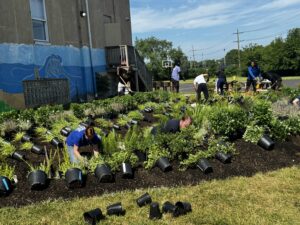
The New Jersey Department of Environmental Protection (NJDEP) best management practices (BMPs) are intended to mimic natural hydrologic conditions and, thus, typically incorporate infiltration and/or vegetation more than traditional stormwater management methods. Rather than “exporting” stormwater to streams and rivers using concrete pipes, tubes, known as “gray” infrastructure, GI uses porous materials, native plants, or temporary storage methods that allow stormwater to soak into the ground to recharge the groundwater and aquifers. The most widely used GI stormwater BMP is the rain garden, which is a type of small-scale bioretention system. Other examples of green infrastructure are listed below. For more information on BMPs, please see the New Jersey Stormwater BMP Manual, which is available at NJ Stormwater Best Management Practices Manual.
Types of Green Infrastructure includes:
-
Rain gardens / bioretention basins
-
Bioswales
-
Native meadows
-
Constructed wetlands
-
Porous pavement
-
Cisterns/rain barrels
-
Green roofs
-
Community forestry
ANJEC’s Role in Implementing GSI
ANJEC has a Green Infrastructure tool kit for Municipalities that includes two resource papers: Long Term Control Plans, Stream Daylighting and Combined Sewer Overflow Programs and Green Infrastructure Design and Options
ANJEC has partnered with numerous organizations for over 10 years to install numerous municipal green infrastructure projects using grant funding from William Penn, NFWF, NJDEP and others. As of 2026, ANJEC in the ground installations of raingardens, riparian buffers, pollinator gardens and enhanced tree pits has resulted in capturing nearly 3.5 million gallons of stormwater runoff per year and treating over 1,200 lbs of total suspended solids, over 20.5 lbs nitrogen and almost 3.0 lbs of phosphorus on a yearly basis.
Other GI Initiatives
-
Newark DIG (Doing Infrastructure Green) Using green infrastructure to improve resiliency to flooding and quality of life for Newark residents
-
Camden SMART The objective of the Camden SMART (Stormwater Management and Resource Training) Initiative is to develop a comprehensive network of green infrastructure programs and projects for the City of Camden.
-
Green Infrastructure for Environmental Justice and Flood Mitigation -will help reduce future flooding in areas of Hackensack with more low- and moderate-income residents and people of color, and help make those areas more enjoyable for residents.
-
Trenton Green Infrastructure Partners– a community-based initiative to implement green infrastructure demonstration projects throughout the City of Trenton
Resources:
-
Introduction to Green Infrastructure Practices (Rutgers NJAES)
-
Green Infrastructure Program (Rutgers NJAES)
-
FAQs for Green Infrastructure Rule (NJDEP)
-
Green Infrastructure in New Jersey (NJDEP)
-
NJ Developers Green Infrastructure Guide (NJ Future)
-
NJ Green Infrastructure Municipal Tool kit (NJ Future)
-
Green Infrastructure (USEPA)
-
Green Infrastructure GI Wizard (USEPA)